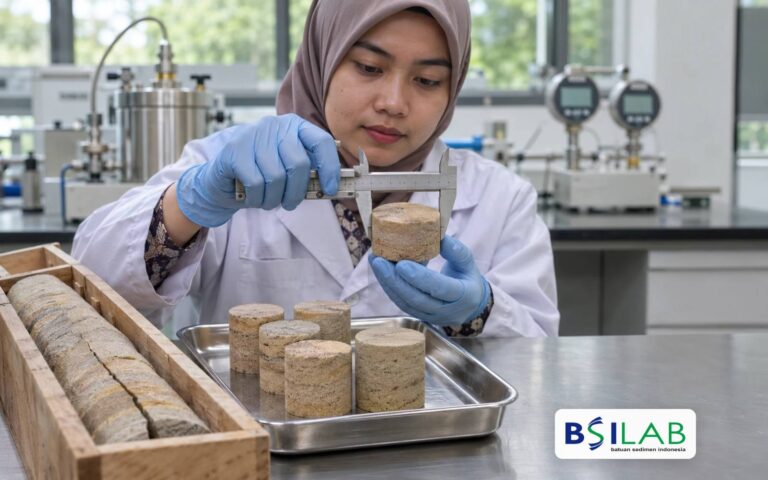
SCAL (Special Core Analysis) is a series of advanced lab tests on core samples of rock to measure how oil, gas and water moving and interacting In the pores of the reservoir rocks. Results—capillary pressure, relative permeability, sterility, and electrical properties—became the main input simulation reservoir and backup calculations. This article explains the understanding of SCAL, as opposed to RCAL, which is kind of the test, and when it's needed.
SCAL is a continuation of RCAL
Core analysis is usually divided by two levels:
| RCAL (Routine Core Analysis) | SCAL (Special Core Analysis) | |
|---|---|---|
| Measured | Poroities, absolute permeasibility, grain density, fluid saturation | Rock-fluida interaction: capillary pressure, relative permeability, validity, electrical properties |
| Number of samples | Many (often tens to hundreds of plug) | A few, selected samples represent the type of rock |
| Old testing | Relative fast | Much longer because it involves fluid flow and equilibrium |
| Functions | Basic characterization and SCAL sample selection | Insert stream model, simulation of reservoir, and synchronization plan |
Because of the expensive and old, the SCAL samples were selected from the results routine core analysis to represent any type of rock type in the reservoir.
Type-type SCAL test
1. Capillary pressure
Measure the pressure it takes one fluid to push another out of the pores. The curve is used to estimate the distribution of water saturation to the altitude above the oil-contact water and the width of the porous neck. Common method: porous plateSentrifus, and mercury injection.
2. Relative permeability (relative permeability)
Shows how easy each fluid flows when two fluids are in the same pore, such as oil and water during water injection. Measured by method steamy-state or unsteady-state, and it became an important input to estimate oil supply.
3. Cleanliness (wettability)
Whether the surface of the stone pellet tends to be wet with water or oil. Cleanliness affects capillary pressure, relative permeability, and water injection effectiveness. Common method: index Amott and USBM.
Four. Electrical properties
Measure formation factor, cesspool exponent m, and saturation exponent n For Archie's equation. These parameters are used by petrophysics experts to calculate the water saturation of the well's resissiveness log.
5. Compatibility and test under pressure
Measure the volume changes of the pores and permeability on the reservoir pressure, so the lab data is closer to the conditions underground.
When is SCAL required?
- Installing the simulation model of the reservoir for the field development plan.
- Planning a water injection or an upgrade method.
- Calculates the water saturation of the log with the calibrated Archie parameters.
- Estimating the transition zone and the altitude of the hydrocarbon column.
Need core data for a reservoir study?
Discuss the routine core analysis and special core analysis of your project with the BSILAB team.
Questions often asked
SCAL stands for what?
SCAL stands for Special Core Analysis, which is a series of advanced lab tests on core samples to measure rock and fluida interactions, such as capillary pressure, relative permeability, validity, and electrical properties. The data was used for the reservoir simulations and backup calculations of migas.
What's the difference between RCAL and SCAL?
RCAL measures the basic properties of rock like porosities and absolute permeability on many samples. SCAL measures the behavior of some fluid flow inside the rocks on the selected sample. RCAL is usually done first, then the results are used to select the sample SCAL represents.
Why does a SCAL test take so long?
Many SCAL tests involve the flow of two fluids and await the state of equilibrium within the pores, for example on a measurement of capillary pressure with porous plate or a relative permeability steadystate. This equilibrium process can last long, so SCAL is much longer than routine analysis.
What's relative permeability data for?
Relative permeability data is used in a reservoir simulation to estimate how oil, gas and water flow together, how much oil can be obtained during water injection, and when it starts producing. This data is the basis of the decision on field development plans.
Read too: Routine Core Analysis · Petrography is Thypal incision, XRD & SEM
McPhee, C., Reed, J. & Zubizarreta, I. (2015). Core Analysis: A Best Practice Guide. Elsevier. · Archie, G.E.. The Electric Residence Log as Transactions of the AIME 146.