


Shape
Each well of exploration is like a window to a deep and complex layer of earth. Behind each drilling, there's one great goal: understanding how much rock potential is below the surface in storing and distributing hydrocarbons.
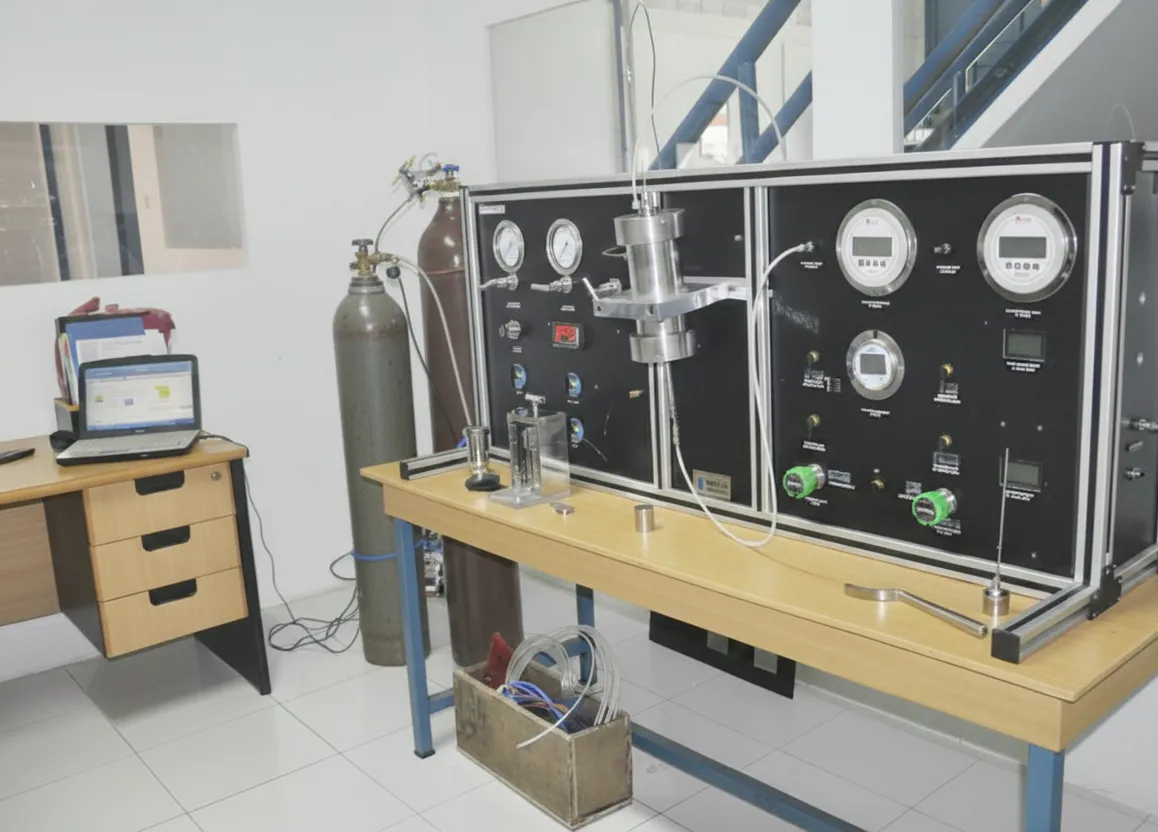
To answer that question, the geologists did core analysis — A series of lab testing conducted against a whole rock sample (sample core) taken from inside the well.
In the hands of an experienced lab like Indonesian Stémen Brick (BSILAB), the core analysis is not only technical testing, but also the art of reading Earth's characteristics.
Data produced has become a crucial basis in determining exploration, field development strategies, into long-term reservoir management.
What's Core Analysis?
Core analysis It's a petrophysics analysis process to determine the physical and chemical properties of the reservoir rocks.
The goal is to know How much rock can save? and drain fluida (permeasibility) Like oil, gas, or water.
In general, core analysis is divided into two categories:
- Routine Core Analysis (RCA) — Analyzing rock's basic properties like poroity, permeability, grain density, and fluid saturation.
- Special Core Analysis (SCAL) — analyze advanced properties, such as capillary pressure, validity (wettability), electrical resistance, and acoustic speed.
BSILAB provides both these kinds of services with a full lab facility and an international standard analysis method.
The Core Analysis Process in BSILAB
Every core sample that enters BSILAB passes through a series of standardized stages to ensure accurate and representative results.
1. Core Handling & Preservation
Rock samples are received from the field with special care to maintain physical and chemical integrity.
BSILAB using system core preservation & resination To make sure the samples are not contaminated during storage.
2. Digital Core Imaging
Before physical analysis was done, samples were scanned with the system Digital imaging High resolution to document internal structures and pattern fractures.
These visual results help the geologists identify rock heterogenitas from the very beginning.
3. Routine Core Analysis (RCA)
RCA includes measurements:
- Poroities & Permeability
- Grain Density
- Regidual Fluid Analysis
- Core Gamma Spectral
- CT Scan Analysis
The RCA provided a general description of fluid storage capacity and the quality of the residential rock.
Four. Special Core Analysis (SCAL)
To understand fluid behavior more specifically, BSILAB does SCAL covering:
- Capillary Presure Measurement
- Relative Permeability
- Wettability Testing
- Electric Residence Measurement
- Acoustic Velocity Test
SCAL Methods are crucial to the reservoir modeling and long-term production predictions.
Modern Technology and International Standard
BSILAB implements a based lab system ISO / IEC 17025 With cutting-edge equipment that can measure rock parameters with precision.
Analysis process follows standard RP 40 API and ASTM D4402, making sure results are internationally acceptable by migas operators and global geoscience.
Besides, BSILAB uses integrated digital database to store analysis results, allow clients to access data anytime for integration to software-simulation reservoir such Petrel, Eclipse, or CMG.
Patrelling: When Data Core Analysis Change Project Direction
In the mid 2023, an energy exploration company faced a stalemate in one of the fields in central Sumatra.
The logging data shows the existence of hydrocarbons, but the production of the test well is very low. Many think that the residential rocks in those layers are unproductive.
BSILAB team then asked to perform Special Core Analysis (SCAL) against the core samples of the well.
Through testing capillary pressure and wettability, found that the rocks have properties oil@@ with high capillary pressure, causing hard oil to flow to the surface in natural conditions.
After understanding this character, the field team changed strategy by applying techniques stimulation and pressure maintenance According to the lab's recommendation.
As a result, production rates tripled in less than two months.
This story becomes proof that Right core analysis data is able to change the direction of the project and save investment worth billions of rupees.
Integrating Core Analysis with Other Geoscics Discipline
BSILAB excellence not only at its laboratory facilities, but also at The ability to integrate between geological data.
The core analysis results can be combined with:
- Geochemistry The foundation to determine the relationship between the poroness of rock and hydrocarbons.
- Petrology To identify the mineral emitter and texture of rock.
- Biostratigraphy To determine the age of the analysed reservoir.
This multidisciplinary integration allows clients to have a thorough understanding of their reservoir, not just from the physical side, but also their geology and chemistry.
Strategic Utilities for Energy Industries Client
- Set Accurately Reservoir Quality
With porosities, permeability, and valid capillary pressure, the company can judge whether the layer of rock has high production potential. - Increase Expedition and Production Efficiency
Core analysis helps determine the best drilling location and the most effective exploitation strategy. - Reduce Economic Risk · Global Voices
By understanding the nature of the reservoir since the beginning, companies can avoid investing in unproductive layers of rock. - Support Scientific Data-Based Decision
BSILAB reports are compiled in a technical format easily integrated into the company's internal system to support audit, the SKK Migas report, or international technical consulting.
BSILAB commitment to Quality and Innovation
BSILAB realized that the challenges of future energy exploration would be increasingly complex. Therefore, the company continues to innovate through:
- Update lab equipment to increase the accuracy of testing.
- Continuous training For lab experts and geoscience.
- Digital-based data integration, ensuring efficiency and speed in the delivery of analysis results.
- Research collaboration with academic institutions and industries for developing new methods in core analysis.
This commitment makes BSILAB not just an analysis service provider, but Strategic partner on the journey of Indonesian energy exploration.
Conclusion
In the world of exploration and production of migas, success depends not only on how deep the well is drilled, but how deep we understand the rock being drilled.
Through core analysis, experts can read the natural language of rock — About how the fluid is moving, stored, and interacting below the surface.
With experience, modern facilities, and dedication to scientific precision, BSILAB Here at the moment, there was a trusted geoscience lab that helped the energy companies make real data-based decisions.
BSILAB is not just a rock test — But A bridge between science and successful exploration strategy.