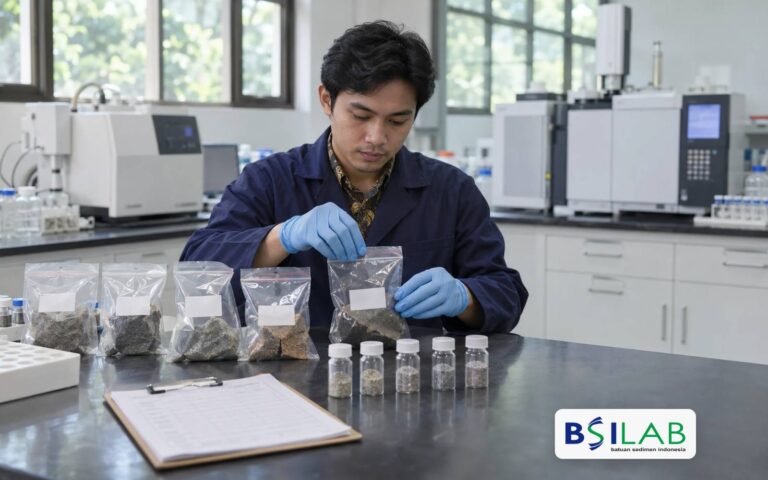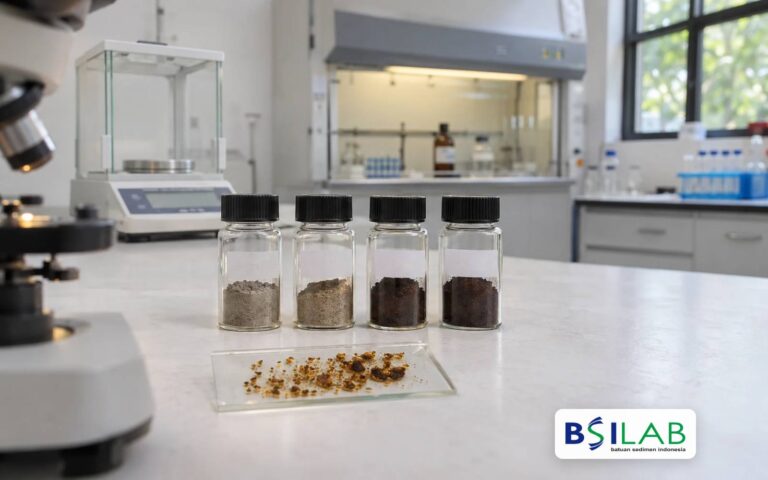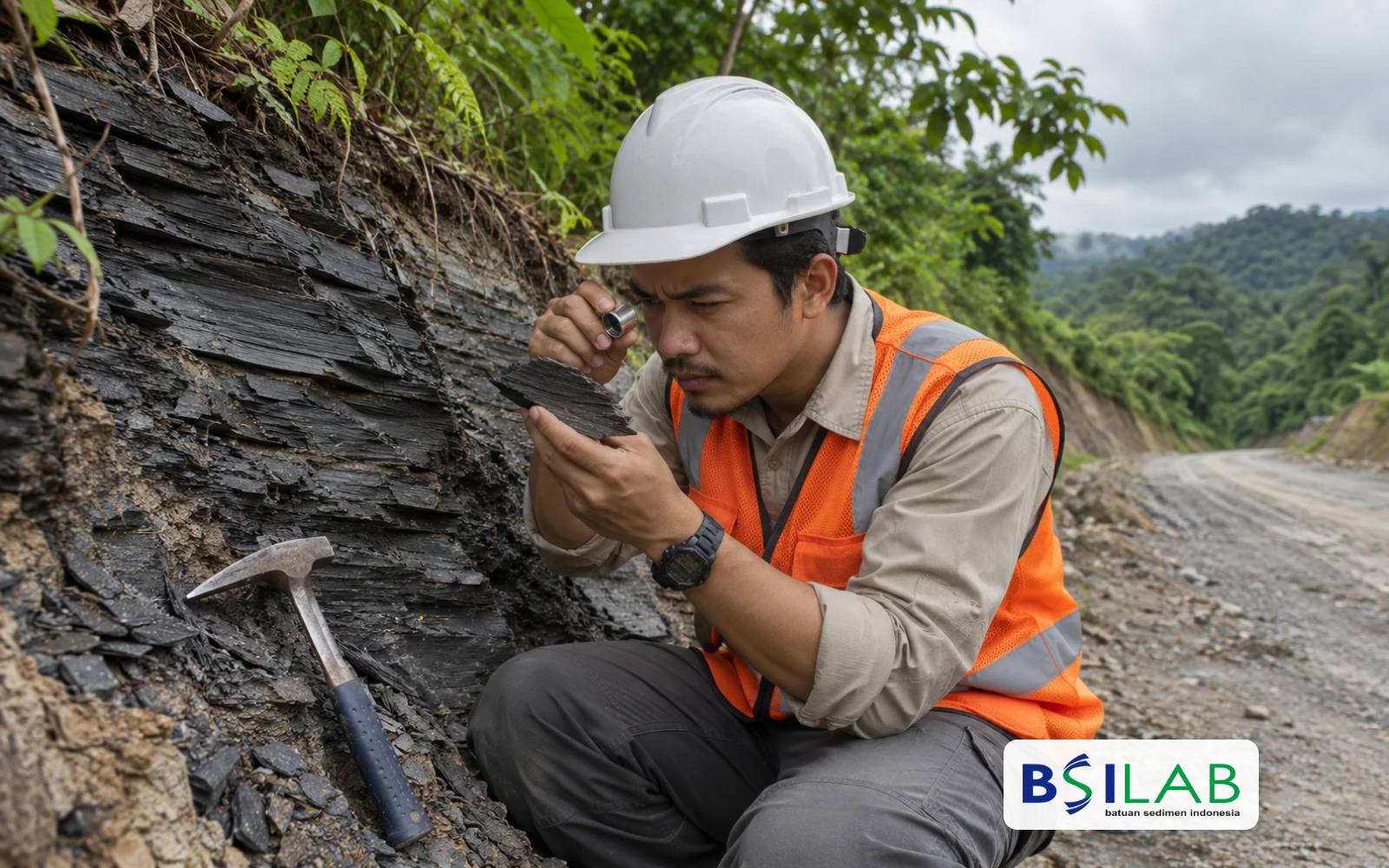
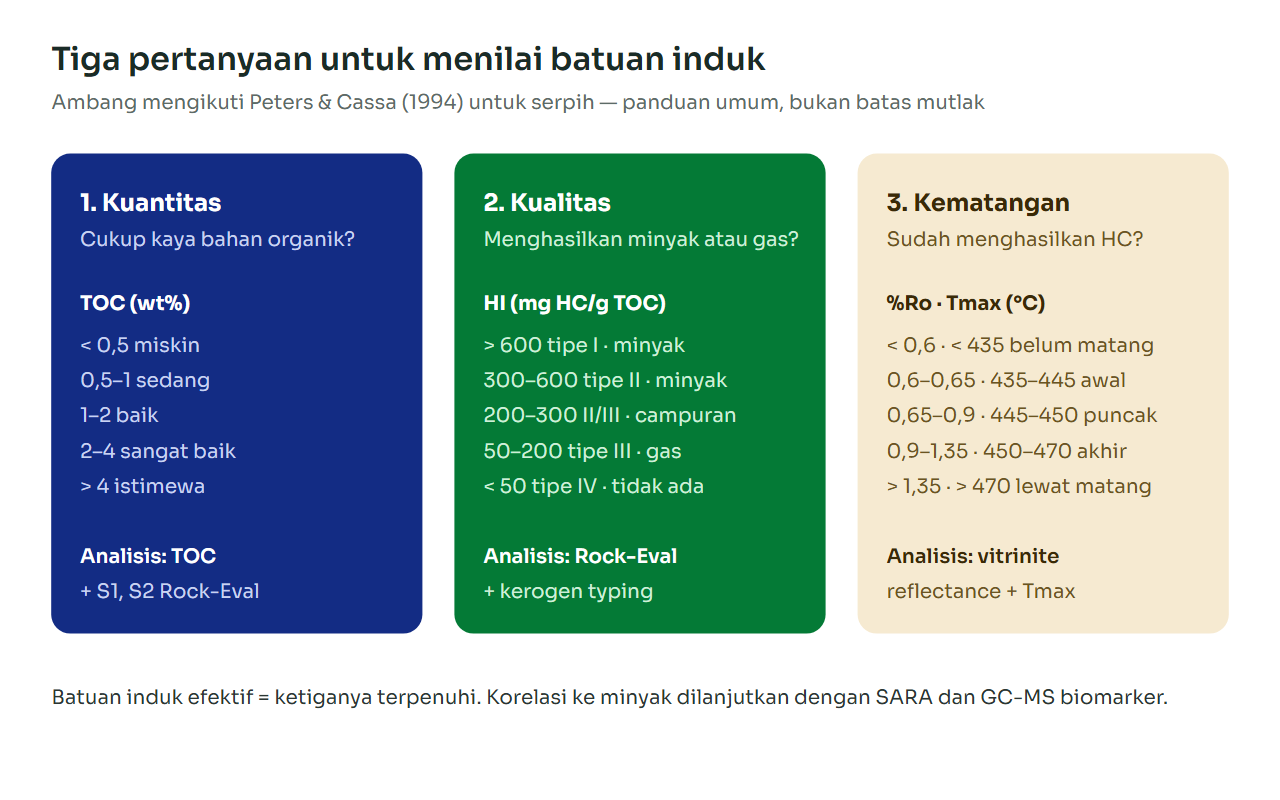
Monkeys (source rock) And, once buried and heated, produced oil or gas. Judging by the parent rocks means answering three questions: Is there a lot of organic material?, What kind of hydrocarbons does it?, and Are those rocks ripe enough?. These three questions are answered with complementary geochemistry analysis: TOC, RockEval Pyrolysis, kerogen typing, and vitrinite reflections.
- Quantity This is measured by TOC (wt%) as well as S1 and S2 Rock-Eval.
- Quality (oil or gas) read from hydrogen index and kerogen type.
- Wealth read from% Ro vitrinit and Tmax Rock-Eval.
- The motherland is called effective when all three are met.
1. Quantitas: Is the organic material enough?
The first step is measuring TOC (Total Organic Carbon), that's the weight percentage of organic carbon in rock. TOC is cheap and fast, so it's used to filter many samples at once. The sample was rich enough then analyzed with Rock-Eval to get S1 (free hydrocarbons already on the rocks) S2 (hydrocarbons can still be generated from kerogens).
| Potential | TOC (wt%) | S1 (mg HC / g rocks) | S2 (mg HC / g rocks) |
|---|---|---|---|
| Poor | < 0,5 | < 0,5 | < 2,5 |
| Medium | 0,5–1 | 0,5–1 | 2,5–5 |
| Good | 1–2 | 1–2 | 5–10 |
| Very good | 2–4 | 2–4 | 10–20 |
| Special | > 4 | > 4 | > 20 |
The emblem on the top goes for the shale. Carbon rocks and rocks that are very mature can have low TOC but still produce hydrocarbons, so TOC numbers are always read along with other data.
2. Quality: produce oil or gas?
The type of hydrocarbons determined by kerogen type, which is a dense organic material that doesn't dissolve in organic solvent. The fastest way to judge is Hydrogen Index from Rock-Eval: HI = S2 S0KTOC × 100 (mg HC / g TOC). The higher the HI, the richer the kerogen hydrogen and the more likely to produce oil. The full description of each type is in the article Kerogen I, II, III and IV.
| HI (mg HC / g TOC) | Kerogen Type | Main product |
|---|---|---|
| > 600 | I | Oil |
| 300–600 | II | Oil |
| 200–300 | II / III | Oil and gas |
| 50–200 | III | Gas (a little oil) |
| < 50 | IV | Insignificant |
HI is only accurate to uncooked rocks, because HI is decreasing as kerogen converts into hydrocarbons. To confirm, the type of kerogen could be checked directly under the microscope through Kerogen typing.
3. Stability: any hydrocarbons?
The organic material has just turned into oil after reaching certain temperatures over a pretty long geological period. The settings read of two parameters checking each other: vitrinite reflection (% Ro) and Tmax From RockEval.
| Stage | % Ro | Tmax (° C) |
|---|---|---|
| Uncooked | < 0,6 | < 435 |
| start date | 0,6–0,65 | 435–445 |
| Top of the oil window | 0,65–0,9 | 445–450 |
| Time of end | 0,9–1,35 | 450–470 |
| Full pass (gas) | > 1,35 | > 470 |
Tmax is a dud when the S2 is so low, because the peak of the pyrolisis is hard to read. In that condition,% Ro is more trustworthy.
Examples of reading results
Suppose a shale has TOC 2.4 wt%, S2 9.6 mg HC / g rocks, Tmax 441 ° C, and% Ro 0.62.
- Quantity: TOC 2.4 wt% including very good, S2 9.6 including Good.
- QualityThe HI is equal to 9.6. 2.4 × 100 is equal to 400 square type Il, tends to produce oil.
- WealthTmax 441 ° C and% Ro 0.62 early ripe, just entered the oil window.
In conclusion, this rock is a good, newly-cooked oil mother rock. If in the same basin there is oil, the next step is proving its relationship with GC-MS biomarker correlation.
Most common error
- Frame sample — The absorption oxidizes organic material so TOC and HI are read lower than the original.
- Bearing mud contamination — Oil-based mud or organic additive can increase S1 and shift the S2 peak.
- Read one parameter only — High TOC on coal or kerogen type IV doesn't necessarily mean good oil potential.
Want to assess the potential of parent rocks in your area of work?
Send a list of your samples. The BSILAB team will help sequence analysis from screen TOC to the biomarker.
Questions often asked
What are the mother rocks?
The motherland is a delicate grain sediment rock, such as shale or napal, which contains enough organic material and can produce oil or gas after it's buried and heated. The motherland is one of the main elements of the petroleum system.
What's the minimum TOC for parent rock?
For shale, TOC below 0.5 wt% is generally considered poor. Value 0.5 to 1 wt% includes medium, 1 to 2 wt% good, and above 2 wt% very good. The TOC needs to be read with a corrosive and rigidity type.
How do you know if parent rock produces oil or gas?
The product type is defined by the kerogen type. Hydrogen Index from Rock-Eval above 300 mg HC / g TOC generally shows a type I or II kerogen that produces oil, whereas the HI 50 to 200 shows the type III kerogen that tends to produce gas.
Is that an oil window?
The oil window is the ripple range when the kerogen produces significant amounts of oil, roughly at% Ro 0.6 to 1.35 or Tmax 435 to 470 ° C. above that range, the parent rock is mainly producing gas.
What analysis would it take to evaluate the parent rocks?
Basic evaluations require TOC and RockEval Pyrolysis. To confirm type and tenacity plus kerogen typing and vitrinite reflection. To connect parent rocks with oil, followed by extraction, SARA, and GC-MS biomarker.
Peters, K.E. & Cassa, M.R. (1994). Applied Source Rock Geochemistry. In Magoon & Dow (ed.), The Petroleum System—From source to trap, AAPG Memoir 60. · Tissot, B.P. & Welte, D.H. (1984). Petroleum Formation and Occurence, 2nd ed. · Espiralié, j dkk. Méthode rapide de caractérisation des roches mères. Revue de I 'Institute of François du Pétrole 32.